
Searching Evansville Court Docket
Evansville itself posts no city court calendar and no municipal judge list. For a traffic, criminal, civil, family, probate, or juvenile matter tied to Evansville, the right tool is MCRO Case Search with Douglas selected. City staff can help with an ordinance, council item, or administrative record. They do not keep the state court's Register of Actions for an Evansville case. Start with whatever the paper in your hand shows. A case number, citation number, or attorney name narrows results fast. Searching by a person or business name calls for the Douglas location filter. Add a category or filed-date limit when you know one. Before trusting a match, compare party role, case type, venue, and date. Remember that MCRO is a remote search layer. It is not a certified record.
- Keep the Evansville citation, case number, or notice in view.
- Choose Name, Case Number, Citation Number, or Attorney in MCRO.
- Select Douglas and add the most useful case or date filters.
- Open Case Details for the Evansville-related case events and hearings.
- Contact Court Administration when the Evansville result is missing, restricted, or needs official confirmation.
Evansville Council Records and Docket
The City of Evansville site covers municipal information and holds a council archive of agendas and minutes. That archive is the right place for a city decision, meeting action, ordinance, or resolution. What it is not: a Douglas District Court hearing or a court Register of Actions. Nothing on a council agenda proves that a case was filed or scheduled in court. The split is practical. Chasing a council decision? Bring the meeting date, agenda item, or resolution number. Chasing a court event? Bring the party name, case number, citation, hearing date, or attorney, and go to MCRO or Court Administration. Both record sets describe the same town. They simply document two different government actions.
| Evansville question | Useful details | Correct record holder |
|---|---|---|
| Filed state case | Name, case number, citation, attorney, Douglas | MCRO and Court Administration |
| Council decision | Meeting date, agenda item, resolution | Evansville council archive |
| Incident or booking material | Date, location, report or citation facts | Appropriate law-enforcement records custodian |
Evansville Municipal Court Basics
Evansville runs a city government, but it operates no separate municipal court. Not every local issue is a court matter anyway. An ordinance question or administrative concern starts with the city. A filed state case belongs to Douglas County District Court. There is no city court portal to point to. Sending searchers there would simply be wrong. The route depends on the paper in front of you. A document with a case number goes to MCRO. Select Douglas. A document citing an ordinance or council action but no court number goes elsewhere. That one goes to the city. The court path opens only at one point. It opens once a matter has actually entered the District Court system. That distinction keeps Evansville civic administration separate from court jurisdiction.
Evansville History and Docket Context
Evansville's official history adds local color, not docket facts. The city's own narrative traces its beginnings to roughly 1858, an early stage route, the railroad's arrival in 1879, and incorporation in 1881. Those milestones describe a community's growth. They say nothing about court filings. No historical page or council record can establish a current court date, charge, or judgment. For the local historical and council context, Evansville's official city site is the source that supplies it.
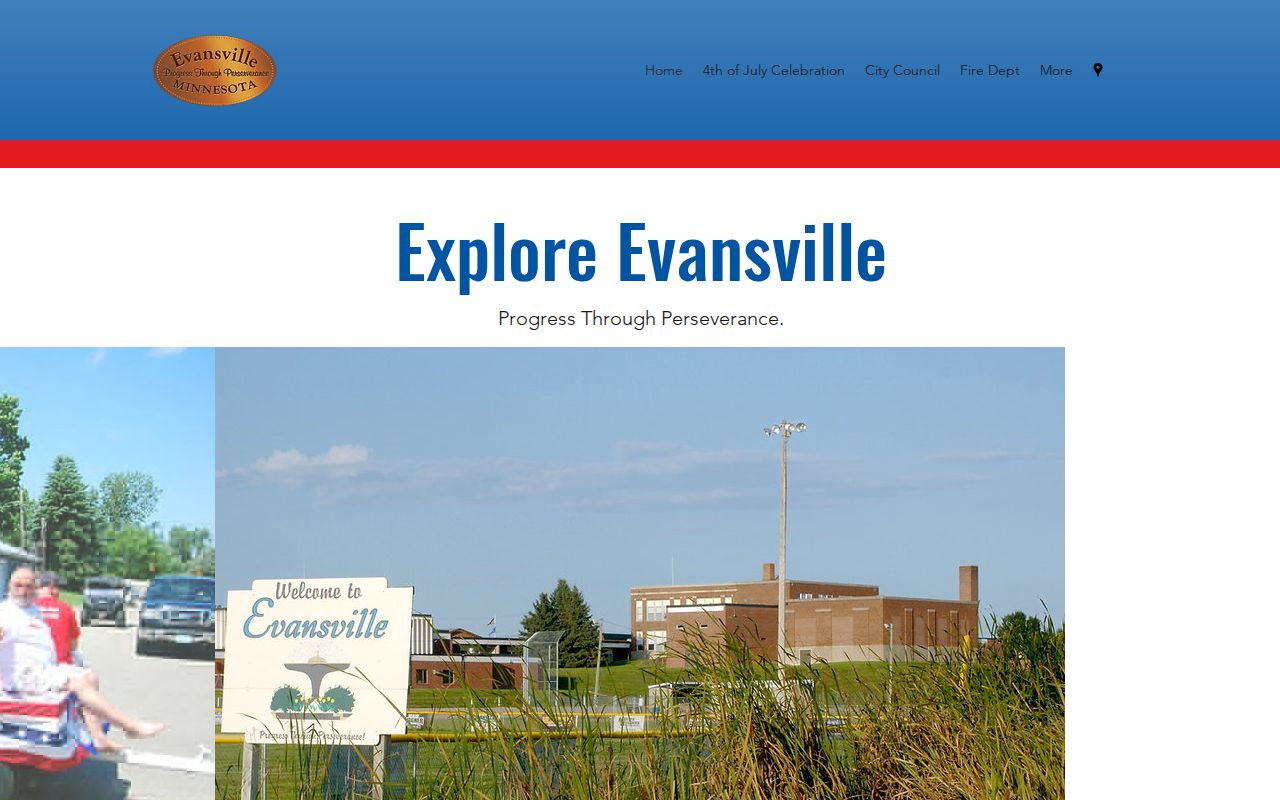
City material is useful for one thing: separating municipal history and council records from a Douglas court docket. For a live Evansville state case, rely on MCRO and the county court calendar. Do not lean on a heritage page. By the official 2020 incorporated-place table, Evansville counted 603 residents, ranking third among the five profiled Douglas cities. That figure is context only. It is not a caseload count. A small population creates no separate docket database and changes nothing about where a state case is heard.
Court Dates and Settings in Evansville
An Evansville hearing is really a Douglas County court setting. Two official tools cover it. MCRO Hearing Search accepts a person, business, case number, attorney, judicial officer, date, category, and the Douglas location. The Douglas weekly public calendar is the other source for scheduled courtroom hearings. A council meeting date is never a substitute for a court setting. Court dates move. They get added, continued, reassigned, or shifted entirely. The county calendar is a schedule, not a full docket. It leaves out confidential or remotely restricted matters. Check any calendar result against the notice in the case file. A known Evansville hearing may be missing from it. You may also need same-day confirmation. Call Douglas Court Administration at (320) 304-6050.
| Date | The scheduled Douglas setting for the Evansville-related court file. |
|---|---|
| Time | The listed time, confirmed against the notice or current calendar. |
| Courtroom | The current courtroom shown for the scheduled setting. |
| Judicial Officer | The assigned officer, which can change during the case. |
| Setting Type | The proceeding label, such as arraignment, pretrial, trial, or compliance review. |
Evansville Citation Search Route
Most Evansville traffic cases start with a citation number. The court case number only shows up later. Enter that citation number in MCRO Case Search, pick Douglas, and skip any spaces. The full number works best. A case number printed on an Evansville notice can pull up the same court file once one exists. Names are the weaker route. A shared name can return the wrong person in a heartbeat. When a result appears, Case Details lays out Case Events, Hearings, Documents, Dispositions, and financial entries, wherever public access allows. One caution matters here. The citation itself is not a final result. No docket entry on it says otherwise. For a current court date, lean on the details view, the calendar, and Court Administration, since each answers a different question. Copy the document's exact number rather than guessing at a pattern.
- Case Number
- The court-file identifier for an Evansville matter after it is in the District Court system.
- Citation Number
- The preprinted identifier that can be used for a traffic lookup before a case number is known.
- Case Event
- A dated filing, order, payment, setting, or administrative entry.
- Hearing
- A scheduled proceeding, not every event in the Evansville court history.
Traffic Tickets in Evansville
An Evansville traffic citation runs through the Douglas court system. There is no separate city docket for it. Keep the citation number handy and follow whatever direction the ticket gives you. The statewide Court Payment Center spells out how to pay. A Douglas contest follows local court direction instead. A city record might explain an Evansville ordinance. It will not show how the court processed the citation. Paying and contesting are two very different roads. Official traffic guidance counts payment as a guilty plea and conviction, so anyone planning to contest an Evansville ticket should follow the appearance instructions before sending money. Payment can be accepted after a hearing was set. MCRO may show a cancelled hearing entry on the docket. For the wider Douglas route, the traffic ticket record page covers it.
Evansville Calendar Confirmation
The Douglas weekly calendar can confirm an Evansville court date. But it shifts fast. The official court notice says the public PDF posts at 7:00 a.m. on business days. It updates hourly after that. Printed calendars placed in courthouse public areas are marked as the most current daily versions. So a saved PDF, a council agenda, or an old web result is a poor bet for a same-day appearance. Check the live sources instead.
Compare the hearing date, case number, and party or attorney name across the case notice, MCRO Hearing Search, and the official calendar. Check it all before you rely on anything. One more thing. The PDF does not list every matter. A missing Evansville name can mean a confidential or nonremote case rather than a cancellation. When a court-date question will not resolve, Court Administration is the reliable escalation point.
Evansville hearing check: A council meeting calendar does not identify a court appearance. Confirm an Evansville state-court setting with the Douglas calendar or Court Administration.
Where Evansville Cases Go
Evansville sits under two record layers. The city keeps its own. The state court system keeps the rest. An Evansville ordinance, council, or administrative matter stays with city hall. Anything filed as a civil, family, probate, juvenile, criminal, or traffic case is different. It belongs to Douglas County District Court. The Seventh Judicial District adds no separate Evansville court or database. So filter MCRO to Douglas whenever you search for an Evansville state case.
Docket flow: Evansville municipal record or ordinance inquiry → Douglas County District Court filing, when filed → MCRO Register of Actions, Case Events, Hearings, and Judgment Details.
Federal cases are different. An Evansville matter in federal court lives in the District of Minnesota system and PACER, not the Douglas court tools. Those tools handle ordinary state cases. A booking or incident record from an Evansville arrest has its own law-enforcement route too. The Douglas County court docket overview sorts out which office holds which record.
Evansville Law Enforcement Records
An Evansville arrest, booking, or incident record is not the court Register of Actions. Law-enforcement material can pin down a date, location, report number, or citation connected to an Evansville matter. It says nothing about the later hearing or disposition. The office holding the source record handles those requests. Once a case is filed, Douglas Court Administration holds the judicial file.
That split keeps a request accurate. Ask law enforcement for an incident report. Ask MCRO or Court Administration for an Evansville complaint, case event, hearing, judgment, or certified court document. Neither office fills in for the other. Keep in mind, too, that the official court record can carry access limits even when the incident record itself is easy to request.
Evansville Court Record Access Rules
The Minnesota Rules of Public Access to Records of the Judicial Branch govern Evansville court records. MCRO serves as the remote public-access layer for many of them. Minnesota Public Access terminals at a courthouse form an in-person layer. Some categories offer broader document availability there than online. Evansville council records, meanwhile, stay municipal. Request those from the city rather than the court.
Remote results can run thin. Sealed, confidential, juvenile, adoption, commitment, domestic-abuse, harassment, and other protected materials all carry access restrictions. Pending traffic and criminal matters without a conviction can face name-search limits as well. The practical move for an Evansville requester is to identify a specific case number, hearing date, judgment, or document index first. Then ask the court which access route fits.
Access rules:
Minnesota Rules of Public Access govern access to judicial records and remote display.
Minnesota Statutes section 13.90 recognizes Supreme Court rules for judicial-branch records.
Use the judicial access-request process for a protected Evansville court record rather than a city council request.
Evansville Federal Docket Boundary
An Evansville case can land in one of two systems. State matters belong to Douglas County District Court. Federal cases do not. Those run through the District of Minnesota under PACER public-access procedures, and the Fergus Falls courthouse is the closest federal venue listed for this area. A name in a news story tells you nothing about which court holds the file. So the case number or court notice is the real clue.
Here is the practical split. Traffic, criminal, civil, family, probate, and juvenile filings for Evansville all start with the Douglas County District Court docket. Anything bearing a federal case number goes the other way. The divide matters. MCRO will never return a federal docket. PACER cannot pull an ordinary Evansville case filed in Douglas District Court. Searching the wrong system just wastes an afternoon.
Note: Court Administration can explain the status and copy process for an Evansville state case, but it cannot advise on the legal meaning of the record.